Sunday, February 28, 2010

Computer and internet Viruses


First, let me give you some definitions before we start.

Viruses - A virus is a small piece of software that piggybacks on real programs. For example, a virus might attach itself to a program such as a spreadsheet program. Each time the spreadsheet program runs, the virus runs, too, and it has the chance to reproduce (by attaching to other programs) or wreak havoc.

E-mail viruses - An e-mail virus travels as an attachment to e-mail messages, and usually replicates itself by automatically mailing itself to dozens of people in the victim's e-mail address book. Some e-mail viruses don't even require a double-click -- they launch when you view the infected message in the preview pane of your e-mail software [source: Johnson].

Trojan horses - A Trojan horse is simply a computer program. The program claims to do one thing (it may claim to be a game) but instead does damage when you run it (it may erase your hard disk). Trojan horses have no way to replicate automatically.

Worms - A worm is a small piece of software that uses computer networks and security holes to replicate itself. A copy of the worm scans the network for another machine that has a specific security hole. It copies itself to the new machine using the security hole, and then starts replicating from there, as well.

Viruses, worms, Trojan horses, botnets, malware and spyware are human-made software programs created specifically to wreak mischief on personal computers and networks. They are so rampant and many nowadays, it has become very "normal" to get a virus in your computer. These viruses start small. All it takes in sometimes just one click to open an attachment from an email and the results can be very disastrous. In January 2004, experts estimate that the Mydoom worm infected approximately a quarter-million computers in a single day. Back in March 1999, the Melissa virus was so powerful that it forced Microsoft and a number of other very large companies to completely turn off their e-mail systems until the virus could be contained. In January 2007, a worm called Storm appeared -- by October, experts believed up to 50 million computers were infected.

Quick, swift, disastrous, or impressive? Most viruses or worms are very simple and harmless in nature. Usually, they just irritate a person by slowing down the entire computer system. However, they could be extremely dangerous and expensive as well. n 1988 a student at Cornell University sent out a virus out by accident, infecting more than 6,000 computers in minutes, nearly bringing the Internet to its knees. The "I Love You" virus caused over $1 billion USD in lost productivity as it crippled e-mail systems worldwide in 2000. And a worm called Conficker hobbled 15 million computers in 2008 and continues to do damage.

Therefore, there is a need for one to start protecting themselves against these virus, worms, trojan horses, etc threats. They can do this by installing free anti-virus softwares, or buying them to prevent any viruses from infiltrating their systems and destroying their work.

What I would suggest would be these few steps that I have managed to find on an online article:

1. Install an anti-virus/anti-spyware program. Anti-virus/anti-spyware software will stop malicious code from downloading and installing onto your computer while you peruse the Internet. Known as viruses, worms, or spyware, this malicious code can destroy important files and render your computer good for only one thing: sending sensitive data back to the server of an identity thief.

2. Don’t store sensitive data on your computer in the first place. Should your computer get infected with a virus, worm, or piece of spyware, you can thwart the individuals responsible by not storing your personal information on your PC so that when and if your computer does send back data – it won’t be anything valuable. Hackers look for things like full names, social security numbers, phone numbers, home addresses, work-related information, and credit card numbers. If these things aren’t saved onto a computer, there’s nothing critical to worry about other than restoring your computer to a non-virus condition.

3. Don’t open files without scanning them with an anti-virus/anti-spyware program. In the past, the warning was to avoid opening files from people that you don’t know. Today it’s really not safe to open files from anyone (without scanning the files) because that’s how viruses get spread – through files – even by mistake. So even though your co-worker may have emailed a funny video, it’s no more safe to open than a video downloaded from a complete stranger. Be safe and scan each and every file you download from the Internet or receive through email regardless of where it came from.

4. Create a barrier between your computer and prying eyes. Anti-virus/anti-spyware programs are only effective after the effect. But you can prevent identity theft from occurring by installing a firewall. A firewall is software that checks all data entering and exiting a computer and it then blocks that which doesn’t meet specified security criteria (user-defined rules).

5. Don’t click on website links in spam messages. In an effort to obtain personal information, some spammers will send email that asks you to click on a link. The email messages are often disguised as important messages from well-known online establishments, and they often try to scare their readers into clicking links with threats of closing an account of some sort. Sometimes the links are harmless and attempt to con the reader into volunteering personal information (credit card number), but other times the links attempt to download harmful software onto a computer.

Your best protection against computer crimes is your own knowledge. Hopefully the suggestions above will prompt you into taking appropriate action and into protecting your computer with the suggested tools. In doing so, you’ll not only protect yourself, you’ll prevent the spread of these malicious activities and protect others at the same time.

Wednesday, February 17, 2010

Google Earth

Google Earth. Is this the coolest technology or what?!

Google Earth lets you fly anywhere on Earth and beyond to view satellite imagery, maps, terrain, 3D buildings, from galaxies in outer space to the canyons of the ocean. You can explore rich geographical content, save your toured places, and share with others.

Google Earth 5 features:
1) Zoom from space to street level — tour the world
2) Find maps, driving directions, hotels, restaurants, and more
3) Historical imagery from around the globe
4) Ocean floor and surface data from marine experts
5) Simplified touring with audio and voice recording

How cool is that? There is in principle now, almost nowhere on earth and beyond that you cannot find, reach, see or experience because of the huge number of satellites all over the world that allows you to explore and experience all sorts of things. Google Earth has pretty much revolutionised what maps are. People can now see actual 3D images or buildings, road, lamposts, and more. There is no longer the need for the primitive use of coding, colors, pages, or zones.

In the business world, Google Earth makes things alot easier for them as well.

Google Earth Pro for business users helps to increase employee productivity, communicate visually, and share geographic information with Google Earth Pro. With the same easy-to-use features and imagery of Google Earth and additional capabilities designed specifically for business users, Google Earth Pro offers the most comprehensive geospatial database, including seamless cityscapes, high-resolution imagery, historical imagery, roads, and points of interest. It is also easy to use, with tools such as, GIS Data Import where geographic information systems (GIS) data and style it into meaningful overlays. Secondly, Radius & Area Measurements measure the area of a property or analyze the land with a radius search all from your desk. Thirdly, High Resolution Printing prints high resolution images (up to 4,800 pixels) for use in presentations, posters, and reports.And lastly, Spreadsheet Importer where map thousands of addresses in the time it takes to find a single address with an easy-to-use spreadsheet import tool.

However, with convenience and technology, comes once again the question of privacy. Satellites all over the world, with cameras that can zoom in further than one can even imagine. Is privacy even possible for anyone nowadays?

Tuesday, February 9, 2010

eLearning


The above video explains a little more on what elearning is all about, I hope you understand what it is now...

The future of learning will be very different from what I am experiencing today. In the future, it seems as though classrooms will be fully digitalized and done on the web. I have another video to share that shows us the future of the classroom. I think it's time to prepare the kids and ourselves for what is up ahead and not lag behind, especially with the quick advancements in technology.

Personally, I struggle with fully online, no face-to-face teaching. This semester, I'm actually doing two modules which are fully online, except for our midterm and final examinations that are held in school. Perhaps I lack the discipline to keep up with the lectures and homework that are posted. There are no teachers around to constantly remind you about homework due or make you attend lecture punctually weekly; instead, in your own time, you can download and watch the videos, doing your own self-study. In some ways, it's training for me, I am forced to keep myself disciplined to watch the two videos posted weekly, before it doubles up and increases till I have to watch 12 videos in two days for my mid-terms, which I had done before during other semesters that I had online modules. It was agonizing...

Anyway, I leave with you the future of digital classrooms, the differences of education yesterday, today, and tomorrow. What do you think of the future of learning?

Sunday, January 31, 2010

Electronic commerce


The e-commerce revolution. Last week, I discussed the social media revolution and this week I realise that anything that has to do with the internet or computer has come to infiltrate and change our ways of living our lives. I think the history of e-commerce and the interviews done in the video clearly show how people are now dependent and many more prefer to embark on e-commerce.

What about me, you may ask. I am embarrassed to tell you that I am a failure in this aspect. Or maybe I just wasn't too hyped up about the business two friends and I tried to start up. But let me just share some experiences on my e-commerce experience.

In Singapore, online blog shops are rampant and popular with young adults and teenagers; my friends and I being one of the many addicted to online shopping saw the opportunity to start our own little business selling female apparel. The reasons being, first, there is no need to get a location for our shop, all we need is a domain name and we would be able to start up our website. Secondly, we can spend all our money on our inventory (dresses, tops, sweaters, skirts, etc). There was no need to take out extra money. Thirdly, little manpower is needed to start an online blog. All we needed to do was to get a livejournal account, name it, buy our inventory, take photos, put them up with descriptions and prices, and there you have it, our business started! Forth, there was no need for the right timing to get the business started, because it was so easy to do so, we could do it in a matter of 1 day. Not much marketing is needed as well, what we could do was to post our site on other community blogs and start building an image for ourselves.

Sounds easy, right?

Well, not really.

Actually, there were many other things we overlooked.. Like the fact that we had to come up with a pricing strategy, and remember that everyone has a different style of fashion that they look for; what we like, may not be what others like. We should have done a study to find our what the mass market prefers, and think of ways to create our unique selling point so that we do not just become 'one of the blog shops' around. There were many other things we did not think about, and thus, the failure of our business. In the end, we realised that it was not as simple and easy as it seemed. There was a need for commitment and time to be placed in running the business well.

Although we did not succeed in our business, I really learnt many things. For one, I know now not to jump into something rashly, but to spend time researching and finding our more about the market and think of ways to market the products that I intend to bring in.

Are you thinking of starting an e-business? Maybe this video can give you some tips, because I wished I had done what he suggested.

Saturday, January 23, 2010

Social Media and you


WOW. I mean, seriously.. I was really amazed at the numbers that were showing up on the video. The social media revolution has got to be the fastest and greatest revolution the world has experienced and seen.

For me personally, I am not too crazy about the whole "facebook" or "friendster" thing. In fact, I don't have a twitter account! I feel that these modes of media just allow one to create the persona and character they want others to see them as. They may not always be genuine and sincere. Thus, I tend to take things I read as a pinch of salt on facebook regarding statuses, etc. In class, I remember our teacher talking about how people post all sorts of pictures partying and clubbing all over the internet, so that people can see and watch how they are "cool".

However, I have learnt that it also depends on the person who is doing it. For some, facebook is really the place where they update friends on their lives. It is certainly a good avenue to keep in contact with friends who are studying or working overseas. It has made things so easy for networking and keeping in touch. All we have to do is simply, click on the friend's page and type a message on his/her wall. No longer do we need to go the extra mile to call, write or email..

I end this post with a short video from a reporter in Sky News in London who shares about how news is gathered with the social media revolution.

As you watch this video, I have the same question as he has for you that I hope you can take some time to think about..

How has social media changed for YOU?

Wednesday, January 13, 2010

Hello world


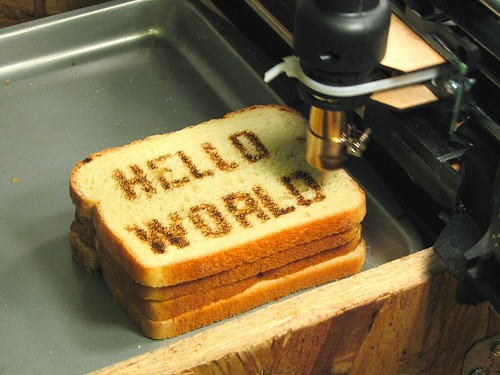
What do I mean when I name the title of this post "Hello world"?

For one, since this is the first post of my blog rambling on the about the internet, it is only right and courteous for me to greet anyone of you reading this page. I hope you will enjoy what you read and perhaps, even gain some form of knowledge about the internet as I ramble on and reflect on what I learn weekly in my introduction to the Internet module this semester. Please feel free to leave your comments so that we can learn from each other and share our thoughts with one another.

The second reason why I greeted you as "world" is because the Internet has truly transformed to become the most powerful and quickest network available globally. I can post this up on the internet in Singapore, and anyone from the other side of the world can read this the moment I post this. It's hard to imagine life without such ease in communication or readily available information and knowledge.

I recall from my first introductory lesson on monday morning that there has been much growth in the 'web' type of the internet networks. Or whatever it actually is called. Basically, there is "Web 1.0" that is a typical 'read-only' page, such as this blog that you are reading. Then it evolved to "Web 2.0" where it is also known as the interactive web that the consumers collaborate to be the producers of the webpage, such as the well-known facebook. Then "Web 3.0" came about to drive towards making the internet intelligent, and making it able to understand the needs of the consumer, such as Amazon.com.

The professor mentioned something that really struck me hard with regards to this. He mentioned that with the technology that people have created and their drive for discovery and creating even newer technology constantly, he will not be surprised if "Web 4.0" comes out soon. This is when the internet knows you. Imagine this, when you go on the internet, there will no longer be a need to browse around yourself or search painfully to do your research. It will be done for you automatically! Now tell me, how cool is that?

Although these things sound really abstract and they seem to appear only in the movies, I can't help but agree that these things will definitely happen in the future and in my lifetime.