Tuesday, April 6, 2010
My dream for the future
Our prof showed this during class earlier this week amidst all the others, but this is one that struck me the most. Perhaps, it is because it is what Singapore is attempting to dream and achieve by the year 2015. ALthough I think it is pretty impossible, at least by the 2015 they are thinking of, I think it is possible especially with the way technology is improving in the world today. A lot of the seemingly impossible things are now possible because of dreams.
What I like most about the video was the part the driver could just ask the computer where the nearest carpark was and the number of lots as he was driving. How convenient! If I were to have such a program, I would want the added feature of where the CHEAPEST carpark lot is, considering the high cost of parking in Singapore!
I thought the present the boy gave to his mom was also so special. It would be really cool if one can just go to a place, take many photos, place it into the machine, and all those present can experience what it would be like if one were really at the place. How amazing would that feeling be!
Personally though, my dream for the future of the internet would be having an application to call robots to clean the house for me exactly the way i want it so that I don't have to hire a maid in the future. A robot with the sole purpose of doing that comes and goes quickly when it has done all the work that it is needed. I think all homes should have one of those! It can be so readily available and affordable for everyone to purchase one.

Sunday, April 4, 2010
Social Networking, the online community and you
A people network. A people highway. What an apt way of explaining what social networking is all about.
Or is that really it?
Do you know that now, Social networking sites have become so popular not only for reconnecting with old friends and even meeting new ones, but police have found they can also be useful when tracking down suspects and are using them to track them down! How amazing is that?
I couldn't embed the video into this blog entry, so please click on the link to watch the video..
Social Networking Sites Aid Police In Suspect Searches: http://www.youtube.com/watch?v=PkaX1x4iBVA
I think it's so cool that social networking sites can be used not only for staying connected, making new friends but catching criminals. I guess, it's just pretty awesome that social networking sites can be used for even greater purposes than the shallow purposes of people seeking attention with what they post. I guess as I've mentioned it before on my first couple of posts that social media has changed many people today.
What I think it has done most are the connections that people can have from every part of the world. If you have a facebook account, just take a look at the number of people you're connected to somehow, and where they are currently; and yet with a click, or a status update, you know exactly what they are up to.
Isn't it true that the world is getting so small nowadays?

How is the internet shaping the future of journalism?
There are two camps with regards to whether the internet is improving journalism or whether it has killed journalism. Let me present these two views and how they came to the conclusion.
Internet has killed traditional journalism
Internet is killing journalists, or at least news organizations like newspapers and television news shows that no longer provide the same value to their customers.There are even websites like Newspaper Death Watch and a Google Maps project that tracks job layoffs at newspapers across the United States. November marks seven consecutive quarters of declining advertising revenue for U.S. newspapers.
Journalism started dying when people stopped looking to newspapers and television for news. It is as simple as that. Mindy McAdams, the current Knight Chair for Journalism, recalls that in 1995 people turned to television for coverage of the Oklahoma City bombing, but by 2001 public demand crashed CNN’s online servers in the aftermath of the World Trade Center attacks.
The Internet has slowly, but surely taken over the role of “see it here first” journalism. Even 24-hour news stations like CNN, MSNBC and FOX News do not have the ability to show news as it happens anywhere in the world. The Internet does. For example, The Virginia Tech shootings, the 2004 Indonesia Tsunami and the bombings in Mumbai, India were all shown online before television. Printed newspapers don’t even have a chance. "In a poll of prominent members of the national news media, nearly two-thirds say the Internet is hurting journalism more than it is helping. The poll, conducted by The Atlantic and National Journal, asked 43 media insiders whether, on balance, journalism has been helped more or hurt more by the rise of news consumption online. Sixty-five percent said journalism has been hurt more, while 34 percent said it has been helped more."
“The Internet has some plusses: It has widened the circle of those participating in the national debate. But it has mortally wounded the financial structure of the news business so that the cost of doing challenging, independent reporting has become all but prohibitive all over the world. It has blurred the line between opinion and fact and created a dynamic in which extreme thought flourishes while balanced judgment is imperiled.”
The Internet is shaping journalism
The ability to interact instantaneously with people from all over the world in both print and on video is the strength of the internet. "Journalism will do more than survive the Internet Age, it will thrive. It will thrive as creators and publishers embrace the collaborative power of new technologies, retool production and distribution strategies and we stop trying to do everything ourselves."
It has been found that for ever half the firms questioned there was a fall in advertising income of more than 10%. However, it has also been found that many do not regard the internet as the future of journalism. "32% of the journalists think that the publication, or TV/radio channel they work for might disappear from the market, while fewer than 10% reckon that their publication, radio or TV channel will survive online."
With the presence of Internet, new forms of distribution such as Twitter and Facebook are widely accepted and increasingly used, and the internet is obviously still not a medium for which journalists create specific content. Just 43% of them say that at least half their online content is originally created for the web. From the European Digital Journalism Survey, more than 66% was found to have no kind of training at all in producing journalism for the new medium. No wonder that within most publications the interaction with user-generated content can be still regarded as passive: 68% accept comments on stories online and only 23% quote bloggers. User-generated content is widely neglected.
Although it is currently not accepted as a medium for actual journalism as of yet, this will probably shift and move as seen from the fact that the internet allows the transmission of information and news in a more real-time manner, quicker and more efficient. Basically, with the internet, everyone can be a journalist!
Now that I have given you two sides of the coin, what do you think is the future of journalism with the presence of the internet?
Information from:
1) http://blogs.reuters.com/from-reuterscom/2009/12/11/how-will-journalism-survive-the-internet-age/
2) http://www.theatlantic.com/magazine/archive/2009/04/media-insiders-say-internet-hurts-journalism/7410/
3) http://newspaper-journalism.suite101.com/article.cfm/how_the_internet_killed_traditional_journalism
4) http://www.guardian.co.uk/media/pda/2009/sep/17/digital-media-future-of-journalism
Internet has killed traditional journalism
Internet is killing journalists, or at least news organizations like newspapers and television news shows that no longer provide the same value to their customers.There are even websites like Newspaper Death Watch and a Google Maps project that tracks job layoffs at newspapers across the United States. November marks seven consecutive quarters of declining advertising revenue for U.S. newspapers.
Journalism started dying when people stopped looking to newspapers and television for news. It is as simple as that. Mindy McAdams, the current Knight Chair for Journalism, recalls that in 1995 people turned to television for coverage of the Oklahoma City bombing, but by 2001 public demand crashed CNN’s online servers in the aftermath of the World Trade Center attacks.
The Internet has slowly, but surely taken over the role of “see it here first” journalism. Even 24-hour news stations like CNN, MSNBC and FOX News do not have the ability to show news as it happens anywhere in the world. The Internet does. For example, The Virginia Tech shootings, the 2004 Indonesia Tsunami and the bombings in Mumbai, India were all shown online before television. Printed newspapers don’t even have a chance. "In a poll of prominent members of the national news media, nearly two-thirds say the Internet is hurting journalism more than it is helping. The poll, conducted by The Atlantic and National Journal, asked 43 media insiders whether, on balance, journalism has been helped more or hurt more by the rise of news consumption online. Sixty-five percent said journalism has been hurt more, while 34 percent said it has been helped more."
“The Internet has some plusses: It has widened the circle of those participating in the national debate. But it has mortally wounded the financial structure of the news business so that the cost of doing challenging, independent reporting has become all but prohibitive all over the world. It has blurred the line between opinion and fact and created a dynamic in which extreme thought flourishes while balanced judgment is imperiled.”
The Internet is shaping journalism
The ability to interact instantaneously with people from all over the world in both print and on video is the strength of the internet. "Journalism will do more than survive the Internet Age, it will thrive. It will thrive as creators and publishers embrace the collaborative power of new technologies, retool production and distribution strategies and we stop trying to do everything ourselves."
It has been found that for ever half the firms questioned there was a fall in advertising income of more than 10%. However, it has also been found that many do not regard the internet as the future of journalism. "32% of the journalists think that the publication, or TV/radio channel they work for might disappear from the market, while fewer than 10% reckon that their publication, radio or TV channel will survive online."
With the presence of Internet, new forms of distribution such as Twitter and Facebook are widely accepted and increasingly used, and the internet is obviously still not a medium for which journalists create specific content. Just 43% of them say that at least half their online content is originally created for the web. From the European Digital Journalism Survey, more than 66% was found to have no kind of training at all in producing journalism for the new medium. No wonder that within most publications the interaction with user-generated content can be still regarded as passive: 68% accept comments on stories online and only 23% quote bloggers. User-generated content is widely neglected.
Although it is currently not accepted as a medium for actual journalism as of yet, this will probably shift and move as seen from the fact that the internet allows the transmission of information and news in a more real-time manner, quicker and more efficient. Basically, with the internet, everyone can be a journalist!
Now that I have given you two sides of the coin, what do you think is the future of journalism with the presence of the internet?
Information from:
1) http://blogs.reuters.com/from-reuterscom/2009/12/11/how-will-journalism-survive-the-internet-age/
2) http://www.theatlantic.com/magazine/archive/2009/04/media-insiders-say-internet-hurts-journalism/7410/
3) http://newspaper-journalism.suite101.com/article.cfm/how_the_internet_killed_traditional_journalism
4) http://www.guardian.co.uk/media/pda/2009/sep/17/digital-media-future-of-journalism
Saturday, April 3, 2010
NewsML

NewsML is an XML language designed for the news industry; a standard way for the tagging of news stories and associated documents. It provides a media independent and structural framework for multimedia news. It is a common way of describing and publishing the content where there are various formats at source, various platforms at the end, flexibility to build packages of content and integration of feeds with machines. NewsML was developed by the IPTC and is popular in North America, Asia and Japan.
XML is also know as eXtensible Markup Language. It is a set of rules for encoding documents electronically. Its design goals emphasize simplicity, generality, usability all over the internet. It seperates content from the information about the content, is of structured definition and thus understood by machines.
IPTC is the International Press Telecommunications Council that is based in London, United Kingdom. It is a consortium of 70 of the world's major news agencies and news industry vendors. They are responsible for developing and maintaining technical standards for improved news exchange that are used by every major news organization in the world.
NewsML is the structure used to publish news in any format. It can be used by news providers to combine their pictures, video, text, graphics and audio files in news output available on web sites, mobile phones, high end desktops, interactive television and any other device. It is however, not a text or image mark-up format; it has no way to mark paragraphs or headlines, for example. Instead, it is an envelope and organizer for one or more files of almost any type.
Everything the recipient might need to know about the content of the news provided can be included in NewsML’s structure. For example, NewsML enables publishers to provide the same text in different languages; a video clip in different formats; or different resolutions of the same photograph. NewsML’s rich metadata concept can help with things like revision levels that make it easy to track the evolution of a NewsItem over time, status details (publishable, embargoed, etc.) and administrative details, such as acknowledgements or copyright details.
NewsML has default metadata vocabularies to ease implementations but it does not dictate which metadata vocabulary is used (IPTC Subject Codes, ISO country codes etc.) – a providers just haves to indicate which vocabulary they are using. Multiple vocabularies can be utilised within the same NewsItem.
NewsML is flexible and extensible and uses standard Internet naming conventions for identifying the news objects in a NewsItem. As such, content does not have to actually be embedded within a NewsItem; pointers can be inserted to content held on a publisher’s web site instead. This means subscribers retrieve the data only when they need to and this makes NewsML bandwidth-efficient.

Which NewsML do YOU want?
NewsML 1 - Released first in 2000, this is the first design of the NewsML approach to exchange news. It was adopted by big news agencies around the globe and is still in use. However, because it is intended for use in electronic production, delivery and archiving it does not include specific provision for traditional paper-based publishing, though formats intended for this purpose - such as the News Industry Text Format (NITF)- can be accommodated. Similarly it is not primarily intended for use in editing or creating news content, though it may be used as a basis for systems doing this. The current version is 1.2, an XML standard.
NewsML G2 - This is the next step in the NewsML evolution. First released in spring 2008, it builds on a framework which is common to a whole family of news exchange standards while its focus remains on the exchange of general news. NewsML G2 acts as an envelope for one or more news items (such as a text article, a photo, or a video clip) or a structured package of links to news items, and contains metadata to describe the relationships between the items. NewsML-G2 is a business-to-business standard that is intended to help news agencies create complex packages of multimedia news into a single cohesive bundle. It uses standardized XML building blocks and metadata. These building blocks are used in other IPTC G2-Standards, so that system programmers can reuse their code. Also the handling of metadata values has been improved. The current version is 2.1.
Information from:
1) http://www.iptc.org/cms/site/index.html?channel=CH0106
2) http://www.iptc.org/cms/site/index.html?channel=CH0111
3) http://about.reuters.com/newsml/
Friday, March 12, 2010
Apathetic young towards politics? Or maybe not.

Are youth really as apathetic as they have been so often cited towards politics? I think not.
For one, in the United States 2004 elections, "Young people turned out in greater numbers than they ever have before. In fact, according to the Center for Information and Civic Learning & Engagement (CIRCLE), youth voting surged by 11 percentage points and 47 percent of 18- to 24-year-old citizens voted. This means young people raised turnout twice more than any other age group."
But that is just one set of numbers that we can cite. There is still a lot more to be done in terms of such visible and tangible methods of studying the attitudes that the young have towards politics.
Before we start anything, let me ask you one question. What is political involvement to a youth these days?
Back in our grandparents' generation, I have seen many history videos back in secondary school history lessons, and heard many stories of them going to a rally or a protest, or join a union. However, today's youth has a whole new definition, according to this survey; "22 percent have worn a wristband, 36 percent have signed an online petition, and 30 percent have written an email or letter advocating a position. Eighteen percent have contributed to a political blog. i.e., 918,000 young people are "political bloggers," which is fascinating since the blogs are a product of only the past few years." With these statistics, is it not visible how the youth are proactive in their methods of joining their form of a rally or protest? In fact, it has been found that college students are on top of national politics, where "68 percent follow the news closely, with 79 percent reporting they get their news from national TV networks, and 34 percent saying they turn to blogs."
Their aim is to build up power for their organisations and movements against the state, irrespective of which pro-rich party happens to control the state. Young people will vote as they see fit, or in some cases choose some form of bottom-up grass-roots mobilisation over party politics.
One thing is clear.
We are not apathetic. We are a generation of politically charged, educated, skeptical, involved and civically engaged youth
Information from:
1) http://www.wiretapmag.org/stories/30495/
2) http://www.jakeg.co.uk/essays/youth_politics.htm
3) http://antieviction.org.za/2009/03/12/academia-apathetic-youth-a-thing-of-the-past/
Sunday, February 28, 2010
Computer and internet Viruses

First, let me give you some definitions before we start.
Viruses - A virus is a small piece of software that piggybacks on real programs. For example, a virus might attach itself to a program such as a spreadsheet program. Each time the spreadsheet program runs, the virus runs, too, and it has the chance to reproduce (by attaching to other programs) or wreak havoc.
E-mail viruses - An e-mail virus travels as an attachment to e-mail messages, and usually replicates itself by automatically mailing itself to dozens of people in the victim's e-mail address book. Some e-mail viruses don't even require a double-click -- they launch when you view the infected message in the preview pane of your e-mail software [source: Johnson].
Trojan horses - A Trojan horse is simply a computer program. The program claims to do one thing (it may claim to be a game) but instead does damage when you run it (it may erase your hard disk). Trojan horses have no way to replicate automatically.
Worms - A worm is a small piece of software that uses computer networks and security holes to replicate itself. A copy of the worm scans the network for another machine that has a specific security hole. It copies itself to the new machine using the security hole, and then starts replicating from there, as well.
Viruses, worms, Trojan horses, botnets, malware and spyware are human-made software programs created specifically to wreak mischief on personal computers and networks. They are so rampant and many nowadays, it has become very "normal" to get a virus in your computer. These viruses start small. All it takes in sometimes just one click to open an attachment from an email and the results can be very disastrous. In January 2004, experts estimate that the Mydoom worm infected approximately a quarter-million computers in a single day. Back in March 1999, the Melissa virus was so powerful that it forced Microsoft and a number of other very large companies to completely turn off their e-mail systems until the virus could be contained. In January 2007, a worm called Storm appeared -- by October, experts believed up to 50 million computers were infected.
Quick, swift, disastrous, or impressive? Most viruses or worms are very simple and harmless in nature. Usually, they just irritate a person by slowing down the entire computer system. However, they could be extremely dangerous and expensive as well. n 1988 a student at Cornell University sent out a virus out by accident, infecting more than 6,000 computers in minutes, nearly bringing the Internet to its knees. The "I Love You" virus caused over $1 billion USD in lost productivity as it crippled e-mail systems worldwide in 2000. And a worm called Conficker hobbled 15 million computers in 2008 and continues to do damage.
Therefore, there is a need for one to start protecting themselves against these virus, worms, trojan horses, etc threats. They can do this by installing free anti-virus softwares, or buying them to prevent any viruses from infiltrating their systems and destroying their work.
What I would suggest would be these few steps that I have managed to find on an online article:
1. Install an anti-virus/anti-spyware program. Anti-virus/anti-spyware software will stop malicious code from downloading and installing onto your computer while you peruse the Internet. Known as viruses, worms, or spyware, this malicious code can destroy important files and render your computer good for only one thing: sending sensitive data back to the server of an identity thief.
2. Don’t store sensitive data on your computer in the first place. Should your computer get infected with a virus, worm, or piece of spyware, you can thwart the individuals responsible by not storing your personal information on your PC so that when and if your computer does send back data – it won’t be anything valuable. Hackers look for things like full names, social security numbers, phone numbers, home addresses, work-related information, and credit card numbers. If these things aren’t saved onto a computer, there’s nothing critical to worry about other than restoring your computer to a non-virus condition.
3. Don’t open files without scanning them with an anti-virus/anti-spyware program. In the past, the warning was to avoid opening files from people that you don’t know. Today it’s really not safe to open files from anyone (without scanning the files) because that’s how viruses get spread – through files – even by mistake. So even though your co-worker may have emailed a funny video, it’s no more safe to open than a video downloaded from a complete stranger. Be safe and scan each and every file you download from the Internet or receive through email regardless of where it came from.
4. Create a barrier between your computer and prying eyes. Anti-virus/anti-spyware programs are only effective after the effect. But you can prevent identity theft from occurring by installing a firewall. A firewall is software that checks all data entering and exiting a computer and it then blocks that which doesn’t meet specified security criteria (user-defined rules).
5. Don’t click on website links in spam messages. In an effort to obtain personal information, some spammers will send email that asks you to click on a link. The email messages are often disguised as important messages from well-known online establishments, and they often try to scare their readers into clicking links with threats of closing an account of some sort. Sometimes the links are harmless and attempt to con the reader into volunteering personal information (credit card number), but other times the links attempt to download harmful software onto a computer.
Your best protection against computer crimes is your own knowledge. Hopefully the suggestions above will prompt you into taking appropriate action and into protecting your computer with the suggested tools. In doing so, you’ll not only protect yourself, you’ll prevent the spread of these malicious activities and protect others at the same time.
Wednesday, February 17, 2010
Google Earth
Google Earth. Is this the coolest technology or what?!
Google Earth lets you fly anywhere on Earth and beyond to view satellite imagery, maps, terrain, 3D buildings, from galaxies in outer space to the canyons of the ocean. You can explore rich geographical content, save your toured places, and share with others.
Google Earth 5 features:
1) Zoom from space to street level — tour the world
2) Find maps, driving directions, hotels, restaurants, and more
3) Historical imagery from around the globe
4) Ocean floor and surface data from marine experts
5) Simplified touring with audio and voice recording
How cool is that? There is in principle now, almost nowhere on earth and beyond that you cannot find, reach, see or experience because of the huge number of satellites all over the world that allows you to explore and experience all sorts of things. Google Earth has pretty much revolutionised what maps are. People can now see actual 3D images or buildings, road, lamposts, and more. There is no longer the need for the primitive use of coding, colors, pages, or zones.
In the business world, Google Earth makes things alot easier for them as well.
Google Earth Pro for business users helps to increase employee productivity, communicate visually, and share geographic information with Google Earth Pro. With the same easy-to-use features and imagery of Google Earth and additional capabilities designed specifically for business users, Google Earth Pro offers the most comprehensive geospatial database, including seamless cityscapes, high-resolution imagery, historical imagery, roads, and points of interest. It is also easy to use, with tools such as, GIS Data Import where geographic information systems (GIS) data and style it into meaningful overlays. Secondly, Radius & Area Measurements measure the area of a property or analyze the land with a radius search all from your desk. Thirdly, High Resolution Printing prints high resolution images (up to 4,800 pixels) for use in presentations, posters, and reports.And lastly, Spreadsheet Importer where map thousands of addresses in the time it takes to find a single address with an easy-to-use spreadsheet import tool.
However, with convenience and technology, comes once again the question of privacy. Satellites all over the world, with cameras that can zoom in further than one can even imagine. Is privacy even possible for anyone nowadays?
Google Earth lets you fly anywhere on Earth and beyond to view satellite imagery, maps, terrain, 3D buildings, from galaxies in outer space to the canyons of the ocean. You can explore rich geographical content, save your toured places, and share with others.
Google Earth 5 features:
1) Zoom from space to street level — tour the world
2) Find maps, driving directions, hotels, restaurants, and more
3) Historical imagery from around the globe
4) Ocean floor and surface data from marine experts
5) Simplified touring with audio and voice recording
How cool is that? There is in principle now, almost nowhere on earth and beyond that you cannot find, reach, see or experience because of the huge number of satellites all over the world that allows you to explore and experience all sorts of things. Google Earth has pretty much revolutionised what maps are. People can now see actual 3D images or buildings, road, lamposts, and more. There is no longer the need for the primitive use of coding, colors, pages, or zones.
In the business world, Google Earth makes things alot easier for them as well.
Google Earth Pro for business users helps to increase employee productivity, communicate visually, and share geographic information with Google Earth Pro. With the same easy-to-use features and imagery of Google Earth and additional capabilities designed specifically for business users, Google Earth Pro offers the most comprehensive geospatial database, including seamless cityscapes, high-resolution imagery, historical imagery, roads, and points of interest. It is also easy to use, with tools such as, GIS Data Import where geographic information systems (GIS) data and style it into meaningful overlays. Secondly, Radius & Area Measurements measure the area of a property or analyze the land with a radius search all from your desk. Thirdly, High Resolution Printing prints high resolution images (up to 4,800 pixels) for use in presentations, posters, and reports.And lastly, Spreadsheet Importer where map thousands of addresses in the time it takes to find a single address with an easy-to-use spreadsheet import tool.
However, with convenience and technology, comes once again the question of privacy. Satellites all over the world, with cameras that can zoom in further than one can even imagine. Is privacy even possible for anyone nowadays?
Tuesday, February 9, 2010
eLearning
The above video explains a little more on what elearning is all about, I hope you understand what it is now...
The future of learning will be very different from what I am experiencing today. In the future, it seems as though classrooms will be fully digitalized and done on the web. I have another video to share that shows us the future of the classroom. I think it's time to prepare the kids and ourselves for what is up ahead and not lag behind, especially with the quick advancements in technology.
Personally, I struggle with fully online, no face-to-face teaching. This semester, I'm actually doing two modules which are fully online, except for our midterm and final examinations that are held in school. Perhaps I lack the discipline to keep up with the lectures and homework that are posted. There are no teachers around to constantly remind you about homework due or make you attend lecture punctually weekly; instead, in your own time, you can download and watch the videos, doing your own self-study. In some ways, it's training for me, I am forced to keep myself disciplined to watch the two videos posted weekly, before it doubles up and increases till I have to watch 12 videos in two days for my mid-terms, which I had done before during other semesters that I had online modules. It was agonizing...
Anyway, I leave with you the future of digital classrooms, the differences of education yesterday, today, and tomorrow. What do you think of the future of learning?
Sunday, January 31, 2010
Electronic commerce

The e-commerce revolution. Last week, I discussed the social media revolution and this week I realise that anything that has to do with the internet or computer has come to infiltrate and change our ways of living our lives. I think the history of e-commerce and the interviews done in the video clearly show how people are now dependent and many more prefer to embark on e-commerce.
What about me, you may ask. I am embarrassed to tell you that I am a failure in this aspect. Or maybe I just wasn't too hyped up about the business two friends and I tried to start up. But let me just share some experiences on my e-commerce experience.
In Singapore, online blog shops are rampant and popular with young adults and teenagers; my friends and I being one of the many addicted to online shopping saw the opportunity to start our own little business selling female apparel. The reasons being, first, there is no need to get a location for our shop, all we need is a domain name and we would be able to start up our website. Secondly, we can spend all our money on our inventory (dresses, tops, sweaters, skirts, etc). There was no need to take out extra money. Thirdly, little manpower is needed to start an online blog. All we needed to do was to get a livejournal account, name it, buy our inventory, take photos, put them up with descriptions and prices, and there you have it, our business started! Forth, there was no need for the right timing to get the business started, because it was so easy to do so, we could do it in a matter of 1 day. Not much marketing is needed as well, what we could do was to post our site on other community blogs and start building an image for ourselves.
Sounds easy, right?
Well, not really.
Actually, there were many other things we overlooked.. Like the fact that we had to come up with a pricing strategy, and remember that everyone has a different style of fashion that they look for; what we like, may not be what others like. We should have done a study to find our what the mass market prefers, and think of ways to create our unique selling point so that we do not just become 'one of the blog shops' around. There were many other things we did not think about, and thus, the failure of our business. In the end, we realised that it was not as simple and easy as it seemed. There was a need for commitment and time to be placed in running the business well.
Although we did not succeed in our business, I really learnt many things. For one, I know now not to jump into something rashly, but to spend time researching and finding our more about the market and think of ways to market the products that I intend to bring in.
Are you thinking of starting an e-business? Maybe this video can give you some tips, because I wished I had done what he suggested.
Saturday, January 23, 2010
Social Media and you
WOW. I mean, seriously.. I was really amazed at the numbers that were showing up on the video. The social media revolution has got to be the fastest and greatest revolution the world has experienced and seen.
For me personally, I am not too crazy about the whole "facebook" or "friendster" thing. In fact, I don't have a twitter account! I feel that these modes of media just allow one to create the persona and character they want others to see them as. They may not always be genuine and sincere. Thus, I tend to take things I read as a pinch of salt on facebook regarding statuses, etc. In class, I remember our teacher talking about how people post all sorts of pictures partying and clubbing all over the internet, so that people can see and watch how they are "cool".
However, I have learnt that it also depends on the person who is doing it. For some, facebook is really the place where they update friends on their lives. It is certainly a good avenue to keep in contact with friends who are studying or working overseas. It has made things so easy for networking and keeping in touch. All we have to do is simply, click on the friend's page and type a message on his/her wall. No longer do we need to go the extra mile to call, write or email..
I end this post with a short video from a reporter in Sky News in London who shares about how news is gathered with the social media revolution.
As you watch this video, I have the same question as he has for you that I hope you can take some time to think about..
How has social media changed for YOU?
Wednesday, January 13, 2010
Hello world
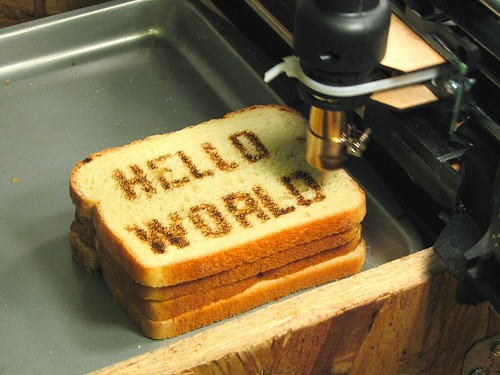
What do I mean when I name the title of this post "Hello world"?
For one, since this is the first post of my blog rambling on the about the internet, it is only right and courteous for me to greet anyone of you reading this page. I hope you will enjoy what you read and perhaps, even gain some form of knowledge about the internet as I ramble on and reflect on what I learn weekly in my introduction to the Internet module this semester. Please feel free to leave your comments so that we can learn from each other and share our thoughts with one another.
The second reason why I greeted you as "world" is because the Internet has truly transformed to become the most powerful and quickest network available globally. I can post this up on the internet in Singapore, and anyone from the other side of the world can read this the moment I post this. It's hard to imagine life without such ease in communication or readily available information and knowledge.
I recall from my first introductory lesson on monday morning that there has been much growth in the 'web' type of the internet networks. Or whatever it actually is called. Basically, there is "Web 1.0" that is a typical 'read-only' page, such as this blog that you are reading. Then it evolved to "Web 2.0" where it is also known as the interactive web that the consumers collaborate to be the producers of the webpage, such as the well-known facebook. Then "Web 3.0" came about to drive towards making the internet intelligent, and making it able to understand the needs of the consumer, such as Amazon.com.
The professor mentioned something that really struck me hard with regards to this. He mentioned that with the technology that people have created and their drive for discovery and creating even newer technology constantly, he will not be surprised if "Web 4.0" comes out soon. This is when the internet knows you. Imagine this, when you go on the internet, there will no longer be a need to browse around yourself or search painfully to do your research. It will be done for you automatically! Now tell me, how cool is that?
Although these things sound really abstract and they seem to appear only in the movies, I can't help but agree that these things will definitely happen in the future and in my lifetime.
Subscribe to:
Posts (Atom)